


It is a Tuesday morning in a pharmaceutical plant somewhere on the outskirts of Hyderabad. Two graduates joined the same company on the same day. Same university. Same grade. Same degree.
One of them is in a white coat, running instrument tests on batches of tablets, logging data into a LIMS system, checking whether the product passed or failed. She will do this 40 times today. The role is called Quality Control. The other is in a meeting room, reviewing a deviation report from last week’s batch failure. He is asking why the failure happened — not just what failed. He is writing a CAPA. He is interrogating the system. The role is called Quality Assurance.
Five years later, one of them is a senior specialist with deep technical expertise, earning well and growing steadily. The other is leading a team, influencing how the entire facility operates, and being headhunted by a multinational.
This is not a story about intelligence or effort. It is a story about understanding which lane you chose — and whether you chose it with clarity or by accident.
“Most biotech graduates choose between QA and QC the way they choose between two menu items they’ve never tasted. Blindly. Based on what sounds better.”
This article exists to end that pattern. By the time you finish reading, you will know exactly what separates these two careers, what each genuinely pays at every stage, which one has more future in a world of automation and AI, and what it actually takes to succeed in each. No fluff. No definitions copy-pasted from a textbook. Just the real picture.
1. What QA and QC Actually Mean (Not the Textbook Version)

Every pharma student has read this line: “QA is proactive, QC is reactive.” It is technically correct and practically useless if you do not understand what it feels like to live inside each function.
Quality Control: The Science of Proof
QC is the function that generates evidence. It answers one question, repeatedly and rigorously: Does this batch of product meet the specification?
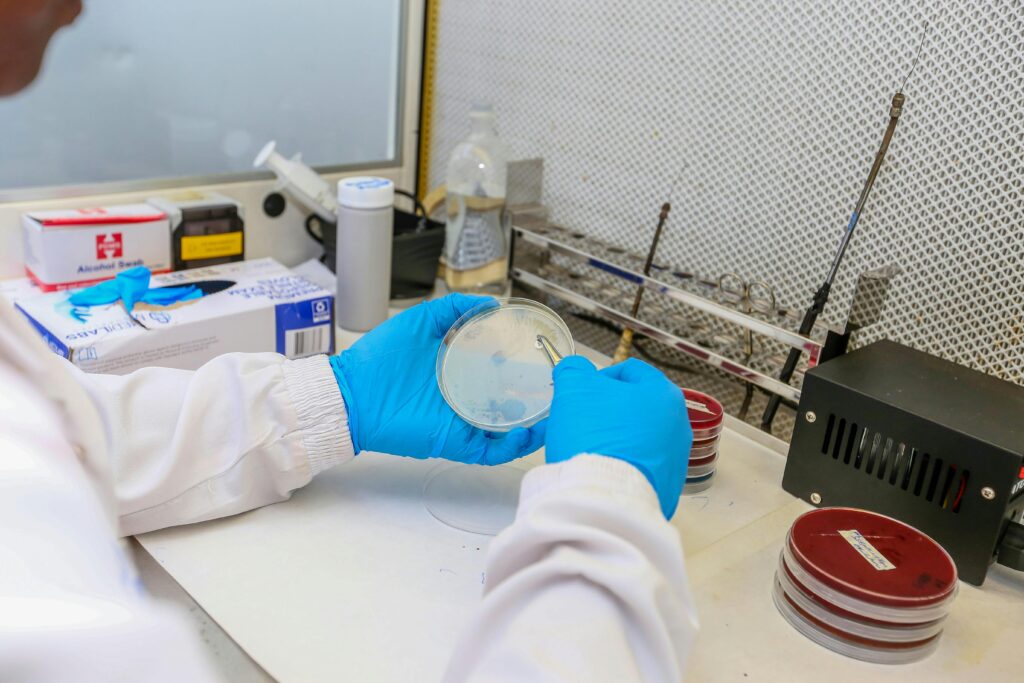
In practice, QC chemists and analysts work inside laboratories. Their world is instruments — HPLC machines, UV spectrophotometers, dissolution apparatus, microbial testing equipment. Their output is data. Their daily currency is accuracy, precision, and the ability to work inside a documented system without making errors.
QC is not glamorous. It is disciplined, technical, and relentless. When a batch fails, QC is who finds it. When a product recall happens, it often starts with a QC result that someone should have caught earlier.
The hard truth about QC: It is highly defined. You will be told exactly what to test, when to test it, and how to test it. The upside is that you become genuinely skilled at analytical science. The downside is that if you are someone who needs variety and strategic thinking to stay motivated, QC can feel like a corridor with walls.
Quality Assurance: The Science of Systems
QA is the function that builds the infrastructure that makes QC possible — and then watches over it. QA answers a different question: Is the system that produces and tests this product designed to prevent failures in the first place?
QA professionals spend their careers inside documentation, audits, SOPs, CAPA investigations, change control processes, and deviation management. They are the people who ask why something went wrong and then redesign the system so it cannot go wrong the same way again. QA is less about instruments and more about judgment. It requires you to understand the entire manufacturing process — not just your corner of it — and to think in terms of risk, compliance, and consequences.
The hard truth about QA: You can go far in QA without being the best scientist in the room. What you cannot do is coast on subject knowledge alone. QA rewards people who communicate clearly, think systematically, and are genuinely uncomfortable with ambiguity in documentation. If you find paperwork tedious, QA will exhaust you.
2. What They Actually Pay

Let us talk about money directly. Salary transparency in Indian pharma is poor. The numbers floating around on job portals are often misleading — either inflated by outliers or deflated by outdated data. Here is an honest picture based on 2025–2026 market reality.
Why the Bottleneck Exists:
| Role | Track | Fresher (0–2 yrs) | 3–5 yrs | Senior / Manager |
|---|---|---|---|---|
| QC Analyst / Chemist | QC | ₹2.4–3.6 LPA | ₹4.5–7 LPA | ₹8–14 LPA |
| QC Senior / Specialist | QC | — | ₹6–9 LPA | ₹12–20 LPA |
| QA Executive / Officer | QA | ₹3.5–5 LPA | ₹6–10 LPA | ₹12–22 LPA |
| QA Manager | QA | — | ₹10–15 LPA | ₹18–30 LPA |
| Quality Head / VP Quality | QA | — | — | ₹30–60+ LPA |
A few important things this table does not show:
- MNC pharma companies (Pfizer, Novartis, AstraZeneca, Sanofi) pay 40–60% more than domestic mid-tier companies at every level.
- Regulated market experience — working on products exported to US FDA, EU EMA, or UK MHRA markets — commands a significant premium. A QA professional with US FDA audit experience is in a categorically different salary bracket.
- Specialisation in biologics, ATMPs, or cell and gene therapy adds another 20–35% premium over conventional pharma QA/QC at mid and senior levels.
- The ceiling in QA is structurally higher than in QC. A QC career plateaus unless it transitions into QA, R&D, or technical leadership. A QA career has a natural path all the way to VP of Quality and Global Quality Director roles.
“The fresher salary gap between QA and QC is small. The five-year gap is enormous. Choose accordingly.”
3. What Automation and AI Actually Mean for Your Career in 2030

This is the section most career articles skip. They tell you the industry is growing. They quote market size numbers. They do not tell you which parts of each function are going to be automated — and which parts are going to become more valuable. Let us be honest.
What Is Changing in QC
The routine analytical work in QC — running standard tests, generating data, entering results — is under significant automation pressure. Automated HPLC systems, robotic sample preparation, AI-enabled instrument reading, and real-time process analytical technology (PAT) are already replacing repetitive QC tasks in advanced facilities.
This does not mean QC is disappearing. It means the QC role is being redefined. The QC professional of 2030 will spend less time running tests and more time interpreting anomalies, validating new methods, managing automated systems, and making scientific judgment calls that a machine cannot make. The low-skill end of QC will shrink. The high-skill end will grow — and pay more.
What this means for you: If you enter QC planning to stay comfortable running routine assays for the rest of your career, the next decade will be uncomfortable. If you enter QC with the intention of building deep analytical expertise and eventually owning method development or validation, you are building a skill set that automation reinforces rather than replaces.
What Is Changing in QA
QA is, structurally, harder to automate than QC. The work of QA — interpreting a deviation, judging whether a CAPA is genuinely corrective, deciding whether a risk is acceptable, communicating with regulators — requires contextual human judgment that current AI cannot reliably perform in a regulated environment.
However, QA is also being transformed. Digital QMS platforms, automated document control, AI-assisted audit preparation, and electronic batch records are eliminating the administrative burden of QA. This is freeing up QA professionals to focus on the genuinely complex work — risk management, regulatory strategy, cross-functional quality leadership.
What this means for you: The QA professionals who will struggle in the future are those who added value purely through document management and paper-chasing. The QA professionals who will thrive are those who understand the science behind the quality system — who can have a technical conversation with production, with R&D, and with a regulatory inspector on the same day.
The Emerging Opportunities — Where the Real Growth Is
1. QA in Biologics and Biosimilars India’s biosimilar pipeline is expanding rapidly. QA professionals with an understanding of biological manufacturing command significantly higher salaries and face far less competition than those in conventional pharma.
2. QA/QC in Cell and Gene Therapy (ATMPs) The most technically demanding and highest-paying frontier in life sciences quality right now. Almost no fresh talent exists in this space — which creates extraordinary opportunity for those who prepare for it deliberately.
3. Quality Systems in CROs and CDMOs India’s contract research and manufacturing sector is growing fast, driven by global pharma outsourcing. These organisations need quality professionals who can work across multiple product types and regulatory frameworks simultaneously.
4. Digital Quality and QMS Implementation As Indian pharma digitalises its quality systems, professionals who understand both quality science and digital tools are in short supply and high demand. This is an emerging niche with almost no trained talent pipeline.
5. Regulatory-Facing QA Working directly on regulatory submissions, dossiers, and inspection preparation for US FDA, EMA, and CDSCO is a highly specialised, high-value QA skill. This will not be automated. It will only grow in importance.
So. Which One Is Right for You?

This is the question most articles pretend they can answer generically. They cannot. But here are the honest diagnostic questions that will make the answer obvious.
Choose QC if:
- You genuinely like being in a laboratory. Not tolerate — like. The precision, the instruments, the physical work of analytical science.
- You find satisfaction in certainty — in a result that is either in spec or out of spec, with clear boundaries.
- You want to build deep technical expertise in a specific analytical domain and eventually move toward method development or validation.
- You are comfortable in a structured, protocol-driven environment where your role is well-defined.
Choose QA if:
- You are drawn to understanding how systems work — and how they fail. You are the person who wants to understand root cause, not just outcome.
- You communicate well. Writing, documentation, presenting findings — these do not drain you.
- You want a career with a clear path into leadership. QA is one of the most direct routes to senior management in pharma.
- You can handle ambiguity. Deviation investigation, regulatory interpretation, audit findings — QA professionals regularly navigate grey areas where the answer is not obvious.
The Uncomfortable Truth Nobody Tells You
Many people end up in QC because QC jobs are more available at the entry level. There are simply more QC analyst positions than QA officer positions for freshers. This is reality — and it is not necessarily a problem.
A QC role, entered with intent, is not a dead end. The professionals who go deepest into analytical science, who earn their expertise through years of hands-on work, and who develop a genuine understanding of quality — not just execution of tests — often cross over into QA or specialist roles within three to five years.
The trap is entering QC passively, collecting years without building depth, and waking up six years later with a resume full of routine test entries and no transferable expertise. That is the career that stagnates. Not QC itself.
“It is not the function that defines your ceiling. It is how intentionally you operate within it.”
What Pharma Recruiters Actually See When They Read Your Profile
Here is something most college professors will not tell you, because they have not sat inside a pharma recruitment process.
When a recruiter at a regulated pharmaceutical company reviews a fresher’s profile, they are not primarily looking at your GPA. They are asking three questions:
One: Does this person understand the environment they are walking into? Do they know what GMP means in practice — not as a definition, but as a way of working?
Two: Can I trust this person with documentation? In a regulated facility, a documentation error can result in a regulatory warning, a product recall, or a failed audit. Freshers who do not understand documentation culture are a liability.
Three: Does this person have any sense of quality mindset — or are they going to treat quality as a checklist?
Most graduates who walk out of college cannot credibly answer any of these three questions. Not because they are not smart — but because universities are not designed to build this kind of readiness. The curriculum teaches you the science. It does not teach you how the industry thinks.
This is the gap that costs graduates months of unemployment, or worse — gets them hired into the wrong role where they underperform and leave wondering what went wrong.
The Bridge That Most Students Never Cross
Knowing the difference between QA and QC on paper is the easy part. You have read this far. You now know more about these two careers than ninety percent of the students who will apply for the same roles as you.
But knowledge without translation is just information. The professionals who actually get hired — who walk into their first pharma role with genuine confidence — are the ones who have done the harder work of understanding what these functions look like from the inside. How a deviation report is actually written. What an audit mindset actually means in a production environment. Why data integrity is not a regulatory lecture but a daily professional standard.
That translation is exactly what Skiaro was built to provide.
Our programs in GMP, Quality Management Systems, Regulatory Affairs, and Advanced Therapies are not delivered by generic trainers. They are built and delivered by professionals who work in these environments today — who know what a recruiter is actually looking for, because they have been the recruiter.
If this article changed how you think about QA and QC, our programs will change how the industry thinks about you.
Explore Skiaro’s training programs at skiaro.com — or reach out directly. Our team is built to give you honest guidance, not a sales pitch.