


Imagine it’s Monday morning in a glass-walled boardroom in Mumbai. A Talent Acquisition Director for a global biopharma giant stares at a spreadsheet. The company has just secured approval for a groundbreaking new therapy. The funding is secured. The technology is state-of-the-art.
But there’s a problem. A “talent bottleneck” is stalling the engine.
As we move through 2026, the Indian pharmaceutical industry is no longer just about making “copycat” generic medicines. We have entered an era of AI-driven R&D, complex biologics, and hyper-strict global regulations. While thousands of life science students graduate every month, companies are struggling to find people who actually know how to do the work.
If you are a student or a fresher, this “bottleneck” is your biggest opportunity. While others are fighting for traditional lab roles, you can fast-track your career by stepping into these three “Gold Mine” roles where recruiters are desperate for talent.
1. Clinical Data Science: Turning “Data” into “Cures”
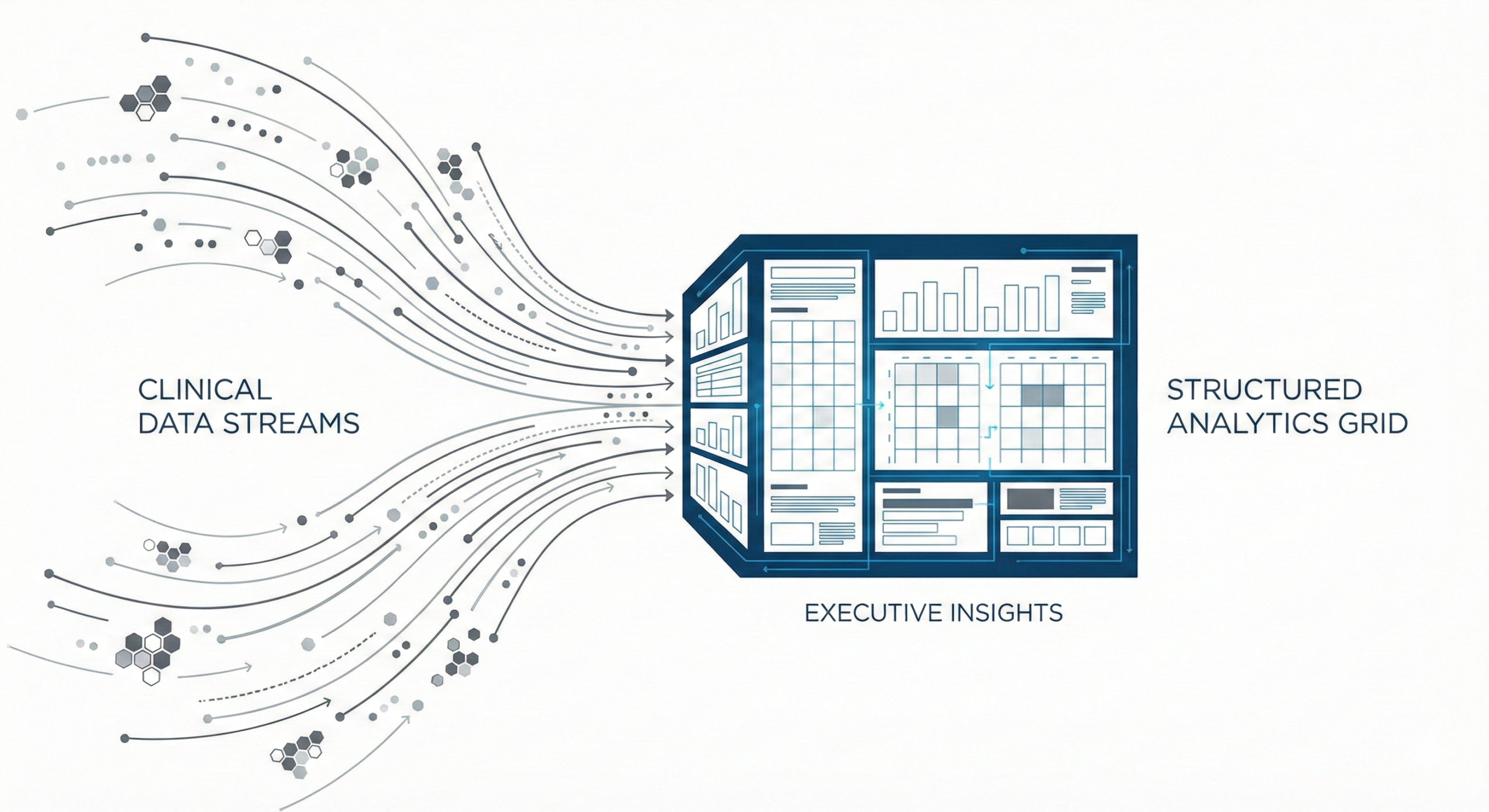
In the past, a Clinical Data Manager’s job was mostly about cleaning spreadsheets and fixing typos. In 2026, that role has transformed into Clinical Data Science.
With the rise of “smart watches” and remote health monitoring, clinical trials now collect billions of data points. A single patient in a trial might generate more data in one day than an entire study did ten years ago.
Why the Bottleneck Exists:
Most graduates understand biology, but they are terrified of “data.” They think you need to be a computer genius to enter this field. Because of this fear, there is a massive shortage of people who can sit between the world of medicine and the world of technology.
What You’ll Actually Do:
- Pattern Detection: Use AI tools to see if a drug is working faster in one group of people than another.
- Risk Monitoring: Spot “red flags” in patient data before they become serious safety issues.
- Digital Integration: Help sync data from wearable devices directly into the trial database.
The Student “Win”:
You don’t need to be a coder. You just need to understand the logic of data. Entry-level salaries in Clinical Data Science are currently 20-30% higher than traditional lab roles because the demand is so high and the supply is so low.
2. Regulatory Strategy: The Architects of the Pharma World
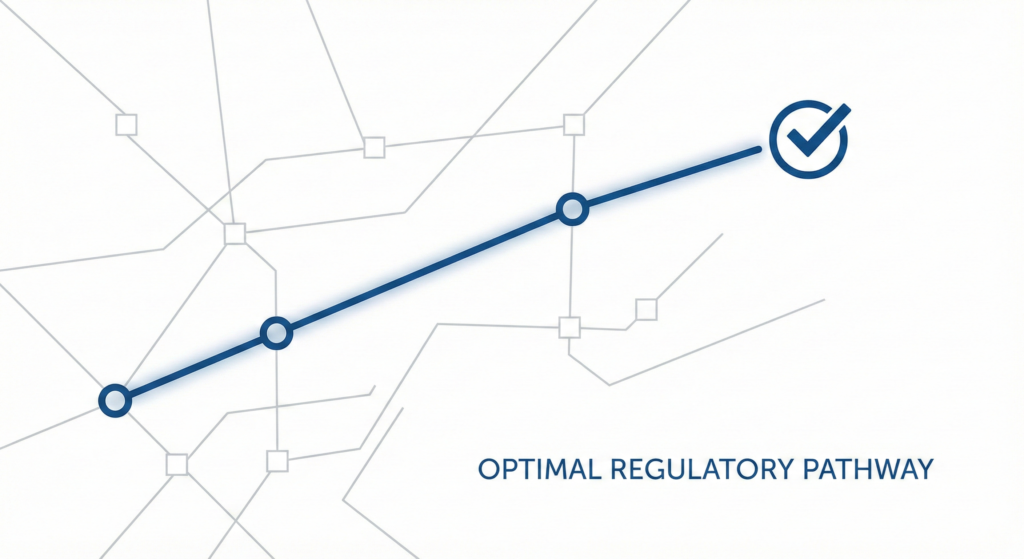
Many students avoid Regulatory Affairs (RA) because they think it’s just boring paperwork. That is a million-dollar mistake. In 2026, Regulatory Affairs has evolved into Regulatory Strategy.
Think of a drug company like a high-speed car. The scientists are the engine, but the Regulatory Strategist is the GPS. Without them, the car crashes into a wall of legal blocks and never reaches the market.
Why the Bottleneck Exists:
Global agencies like the USFDA and EMA (Europe) have changed the rules. They now require digital submissions and “Real-World Evidence.” Most senior professionals are struggling to keep up with these new digital rules, and freshers haven’t been taught them in college. This has created a “void” where companies are looking for young, tech-savvy graduates who have been trained in modern regulatory pathways.
What You’ll Actually Do:
- The Roadmap: You decide how and when to talk to the government to get a drug approved.
- Global Compliance: Ensure that a drug made in Hyderabad meets the exact safety standards of London or New York.
- CMC Life Cycle: Managing the “Chemistry, Manufacturing, and Controls” to prove that every single pill is exactly the same as the last one.
The Student “Win”:
This is a “recession-proof” job. Even if the economy slows down, companies must stay compliant with the law. If you understand Regulatory Strategy, you aren’t just an employee; you are a “Business-Critical Asset.”
3. Biomanufacturing (CMC): The Future of “Living Medicines”
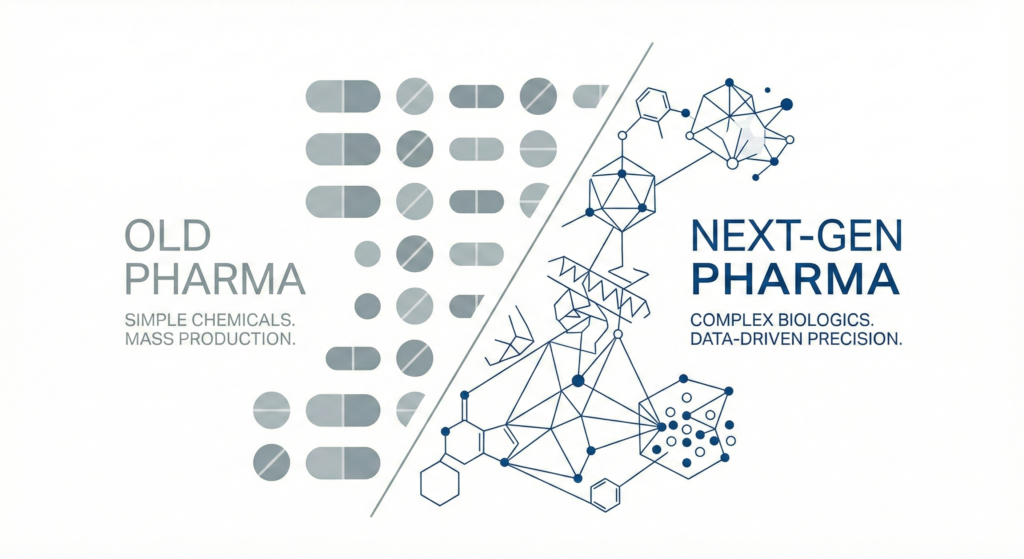
The “Golden Age” of simple chemical pills is fading. Today, the most exciting medicines are biologics—medicines made from living cells. This includes things like mRNA vaccines and personalized cancer therapies.
But making “living” medicine is incredibly hard. It requires a specialized field called Biomanufacturing (CMC).
Why the Bottleneck Exists:
Building a factory for biologics is 10x more complex than a regular pharma plant. It requires “Smart Factories” and “Digital Twins” (virtual copies of the factory). There are almost no freshers who know how to operate this new tech. Recruiters are currently seeing “Role Openings” stay vacant for 6 months because they can’t find people with even basic bioprocessing knowledge.
What You’ll Actually Do:
- Scale-Up: Taking a tiny experiment from a test tube and making it work in a 2,000-liter bioreactor.
- Quality by Design (QbD): Using math and science to ensure the medicine is pure and safe every single time.
- Automation: Working with ISO-compliant robots that handle the medicine in sterile environments.
The Student “Win”:
Biomanufacturing is where the “big money” is moving. Major companies like Biocon, Dr. Reddy’s, and Pfizer are investing billions in these plants. Getting into CMC now is like getting into the IT industry in the 1990s—you are catching the wave right at the start.
The Reality Check: Why Your Degree Isn’t Enough
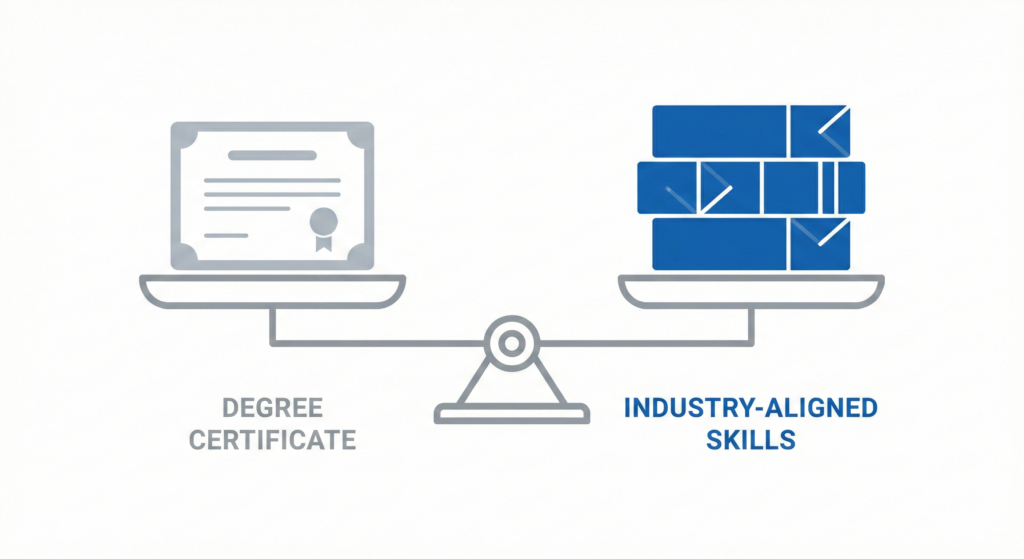
If you feel frustrated that “nobody is hiring freshers,” you have to look at it from the recruiter’s perspective. They are under immense pressure. They don’t have six months to teach you the basics of GxP compliance or Clinical Data standards.
The “Employability Gap” in India is real. According to national employability studies, 56% of graduates are “technically” employable, only a tiny fraction are “Day 1 Ready.”
How to Break the Bottleneck:
- Stop Chasing Titles, Start Chasing Skills: Don’t just look for “Job,” look for “Skills.” Do you know how to use an EDC (Electronic Data Capture) system? Do you understand ICH-GCP guidelines?
- Get Certified, Not Just Graduated: Micro-credentials and industry-aligned certifications are the new “currency” of 2026. A 3-month specialized course often carries more weight with a recruiter than a 4-year general degree.
- Think Global: The roles in Data Science and Regulatory Strategy are often global. You could be sitting in Bengaluru while managing a trial for a patient in Germany.
Final Thoughts: The Bridge to Your Future
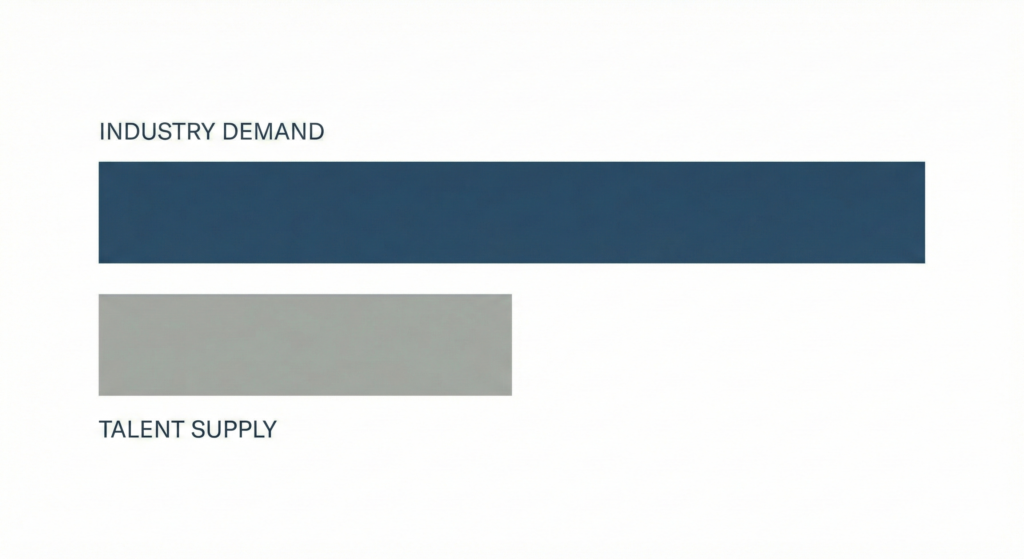
The “2026 Talent Bottleneck” is a wall for most, but it’s a door for you. The industry is desperate for talent in Clinical Data Science, Regulatory Strategy, and Biomanufacturing. They have the seats; they just need the right people to fill them.
At Skiaro, we built our entire mission around this exact problem. We don’t just “teach” biology; we build the bridge between your academic degree and the high-demand roles of the future.
The seats are filling. The industry is not waiting. The only question left is whether you are preparing for the roles of yesterday — or the workforce of tomorrow.