

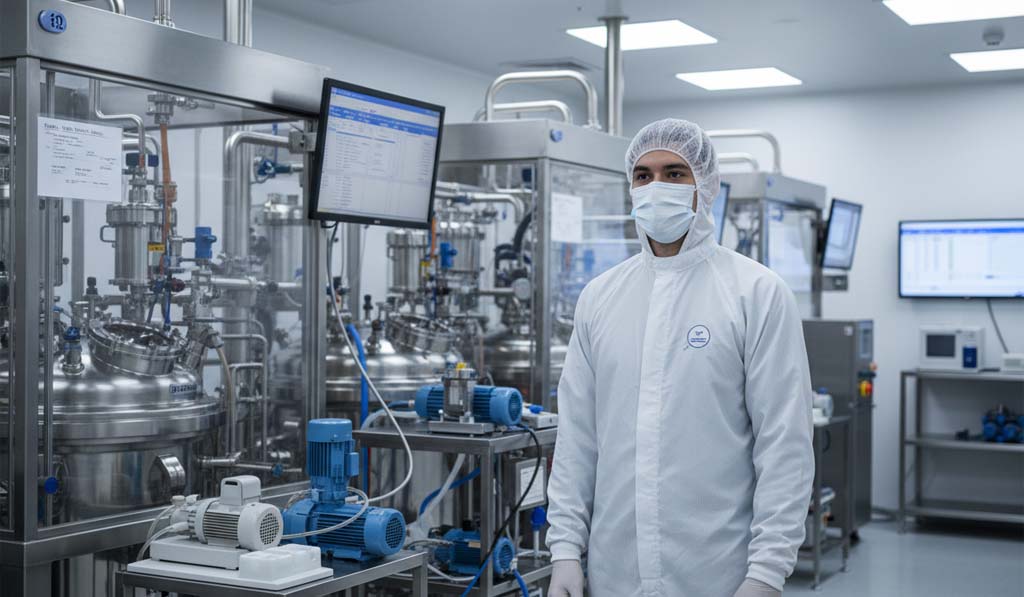
The first day inside a biotechnology facility rarely looks like what students imagine. There are no dramatic breakthroughs unfolding in glassware, no cinematic “eureka” moments echoing across laboratories. Instead, you notice something far more powerful — structure. Every movement is documented. Every material is traceable. Every process is validated.
This is the quiet force that protects millions of patients across the world.
It is called Good Manufacturing Practices (GMP). And for biotechnology students preparing to step into the industry, understanding GMP is no longer optional – it is foundational
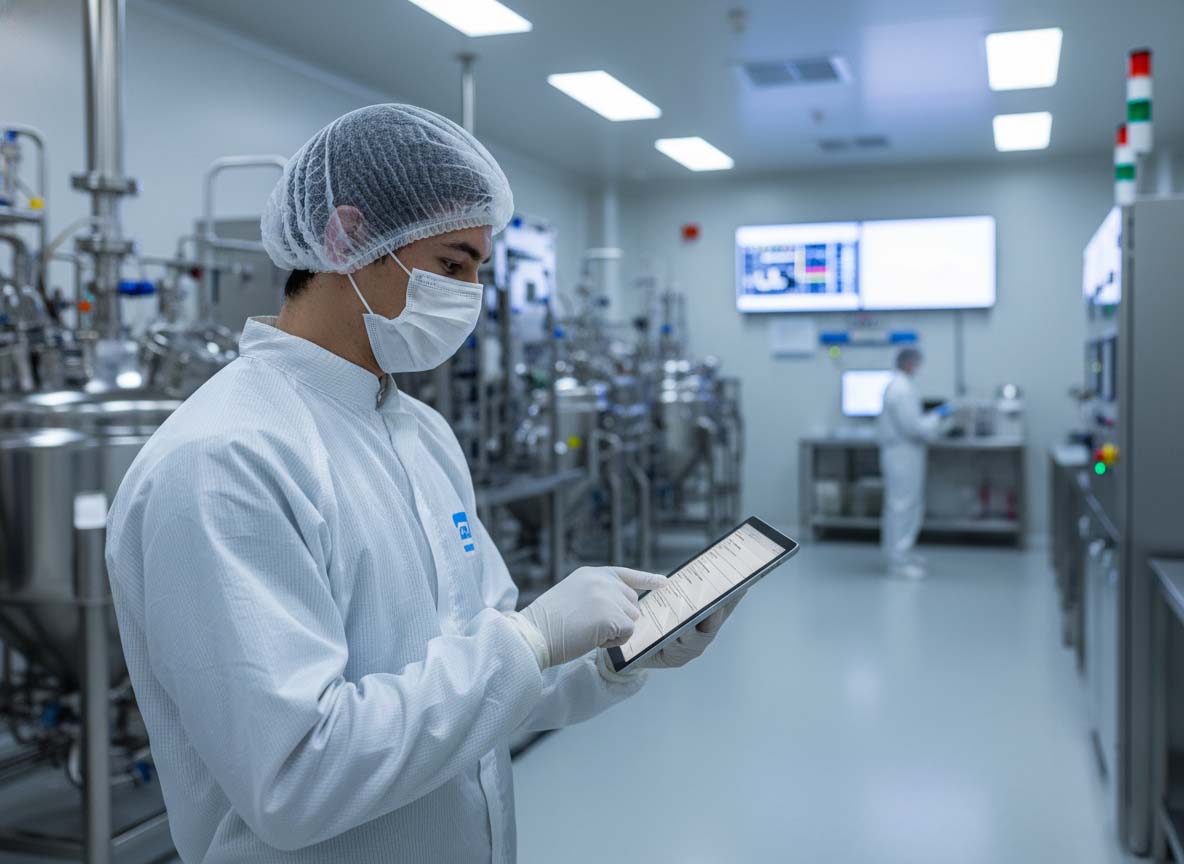
That question is answered through GMP in biotechnology, the globally accepted framework that ensures drugs and biologics are safe, effective, and manufactured under controlled conditions. Students often assume innovation drives biotech forward. In truth, innovation survives only when supported by pharmaceutical quality systems.
Without quality, even the most promising therapy never reaches a patient.
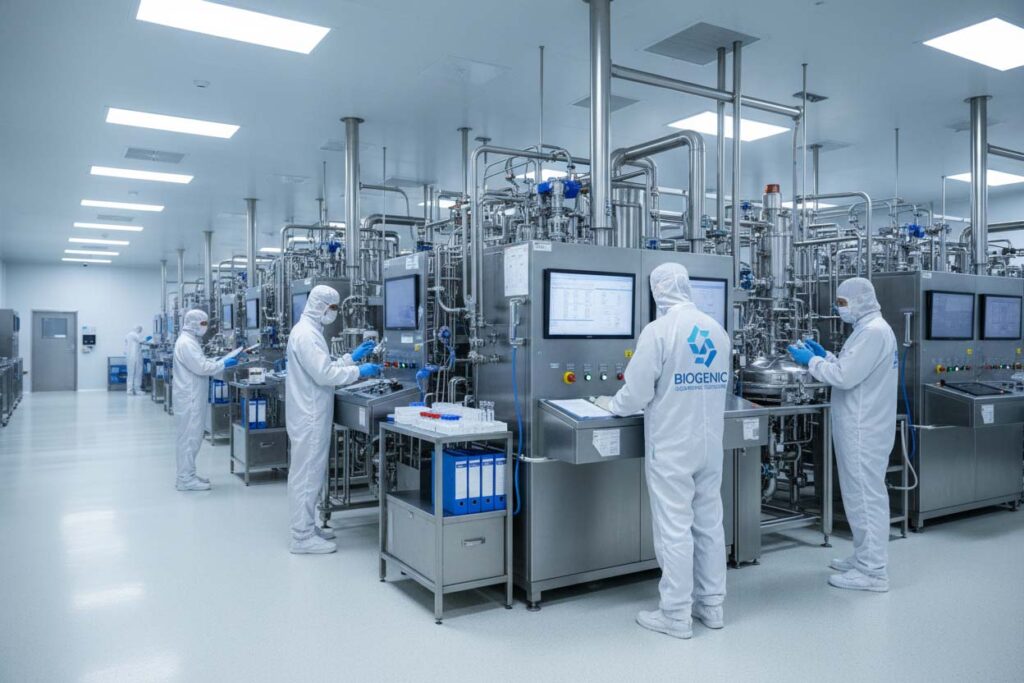
Imagine joining a biologics manufacturing facility on your first job. Within hours, you hear terms like deviation, CAPA, change control, validation, and data integrity. To the unprepared graduate, it feels like learning a new language overnight.
This is why early exposure to GMP training for biotech students dramatically changes career readiness. When students understand biotech regulatory compliance, they transition from academic observers to industry contributors. Modern employers are not just hiring degrees, they are hiring awareness.
Professionals who understand quality assurance in biotechnology make fewer operational errors, adapt faster to controlled environments, and earn trust earlier in their careers.
In other words, GMP-aware graduates stand apart.
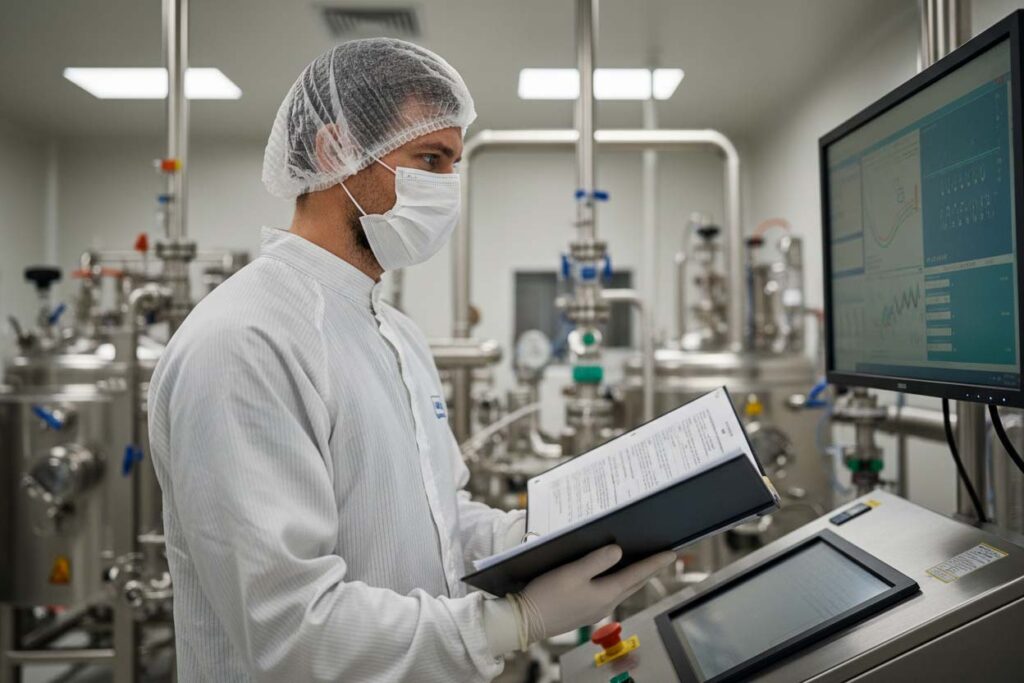
Many students initially perceive GMP as restrictive. Documentation, protocols, approvals — it can appear procedural. But step back, and you see its real purpose. GMP is about patient protection.
Every checklist exists because somewhere in history, a failure taught the industry a costly lesson. Through biotech manufacturing standards, companies ensure reproducibility across batches. Through validation in biotechnology, they prove processes perform exactly as intended. And through data integrity in pharma, they safeguard the truth behind every recorded result.
Quality is not bureaucracy. It is ethical science in action.
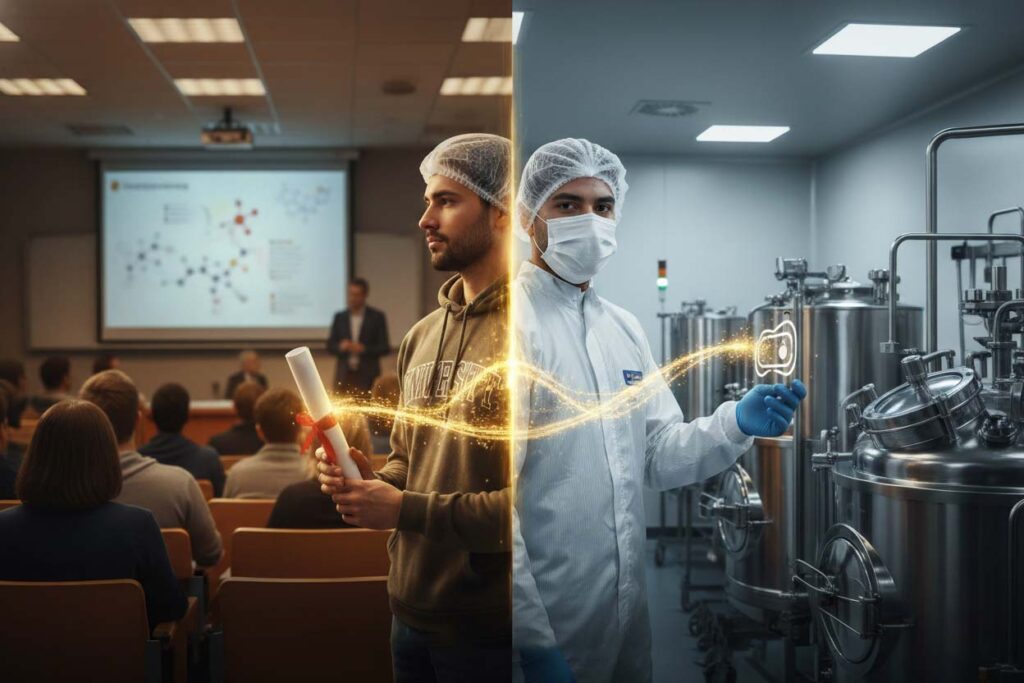
Biotechnology is evolving at remarkable speed from monoclonal antibodies to cell and gene therapies. Yet one trend is becoming unmistakable: Companies increasingly prefer graduates who understand industry environments before their first day. This is where industry-aligned biotech training is reshaping professional readiness.
Exposure to Quality Management Systems (QMS) in pharma, real-world documentation practices, and GMP compliance training reduces the gap between classroom learning and operational expectations. Forward-looking learning platforms are recognizing this shift by integrating practical exposure alongside theoretical depth — ensuring graduates are not just qualified, but capable.
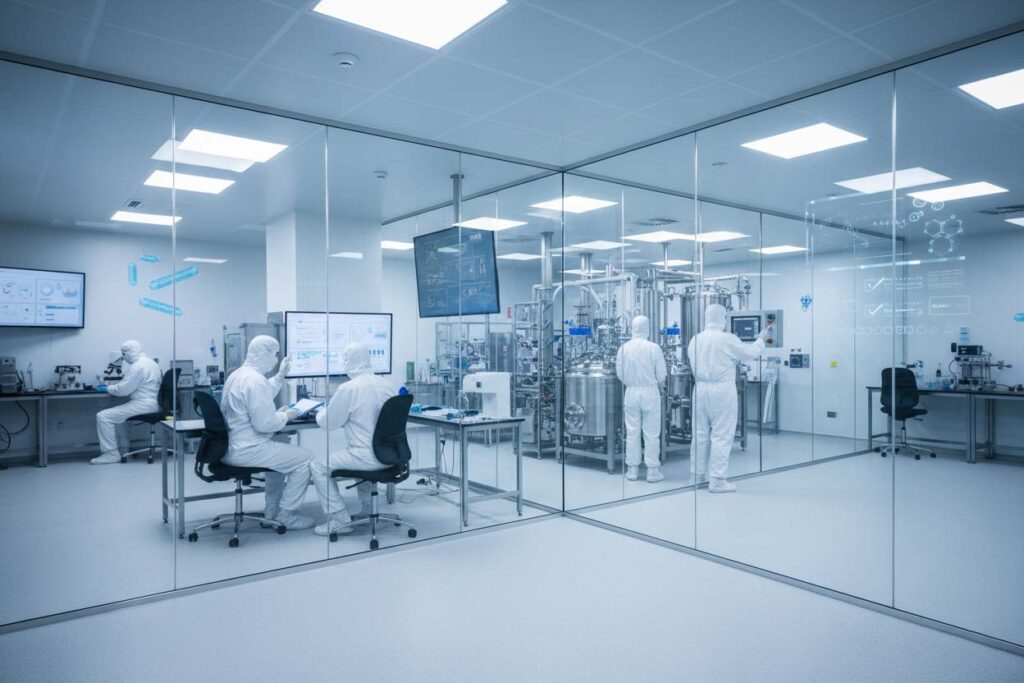
A common misconception among students is that GMP matters only if they enter production. The reality is far broader. Whether you pursue research, quality control, regulatory affairs, clinical development, or technical operations, regulatory guidelines in biotechnology influence every function.
Understanding biologics manufacturing helps researchers design scalable processes. Familiarity with cleanroom practices supports contamination control awareness. Knowledge of process validation in pharma strengthens analytical thinking.
Even roles in innovation benefit from GMP literacy — because discovery without manufacturability rarely succeeds. The strongest biotech professionals think beyond experiments. They think in systems.
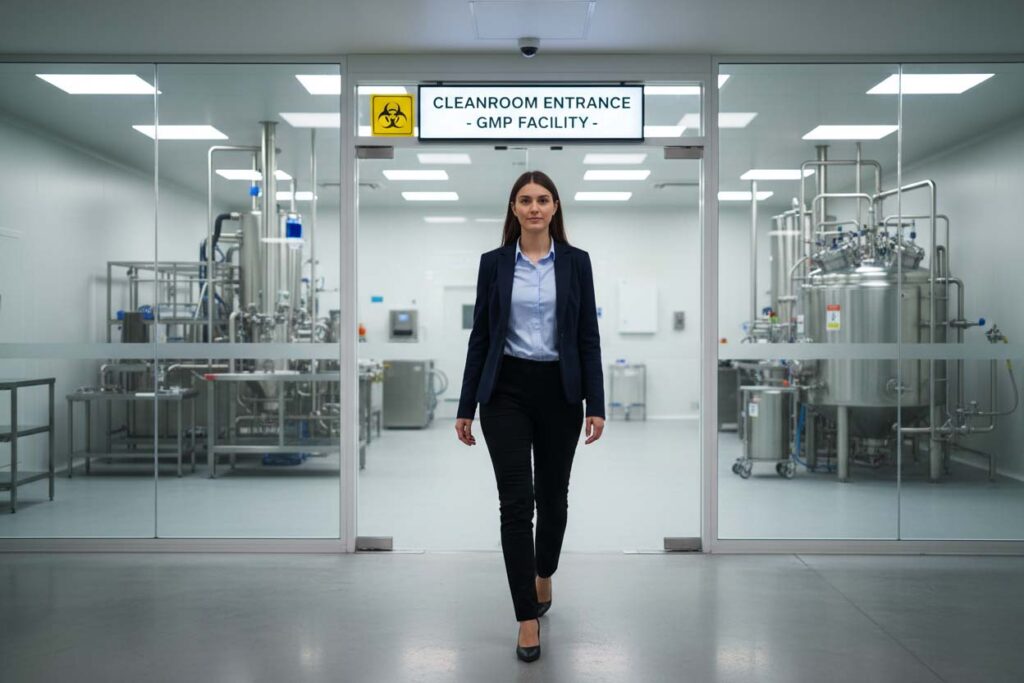
Confidence in biotechnology does not come from memorizing textbooks. It comes from knowing what awaits you. Students exposed early to biotech industry readiness programs often experience less career anxiety. Interviews feel more conversational. Technical discussions feel familiar. They don’t just answer questions — they demonstrate perspective.
Structured learning environments that emphasize GMP, QMS, pharmaceutical workflows, and real-world expectations help cultivate this confidence. Some emerging platforms are going a step further by collaborating directly with industry leaders, enabling students to learn what companies actually expect — not what outdated curricula assume.
The outcome is powerful: Graduates who walk into industries prepared, not intimidated.

There is something senior leaders across biotech quietly agree upon: Technical skills can be taught quickly. Quality mindset cannot.
When students internalize GMP regulations, they develop professional discipline early. They document carefully. They question deviations. They respect traceability. These behaviors signal maturity — even in entry-level roles. In a sector where mistakes can impact patient lives, trust accelerates careers. Understanding pharma quality systems is not just about compliance. It is about credibility.

At first glance, the rigorous standards of GMP might seem daunting. But this high barrier to entry protects something else: Your career stability.
The pharmaceutical and biotechnology sectors are not just growing; they are expanding at a historic pace.
- Global Scale: The pharmaceutical market is on a trajectory to nearly double, projected to reach $4 trillion by 2034. Meanwhile, the biotechnology sector is exploding even faster, predicted to surge from $1.77 trillion in 2025 to over $6 trillion by 2035.
- The Indian Advantage: Closer to home, the story is even more compelling. The Indian bio-economy has rocketed from just $10 billion in 2015 to $130 billion in 2024, with sights set on $300 billion by 2030.
What does this mean for you? These numbers don’t just represent revenue; they represent a massive vacuum for talent. As the industry scales, the demand for professionals who can navigate regulatory complexities is outpacing supply.
By mastering GMP early, you are not just learning a set of rules. You are positioning yourself at the forefront of a $300 billion opportunity, distinguishing yourself as the “industry-ready” professional that this booming market is desperate to hire.
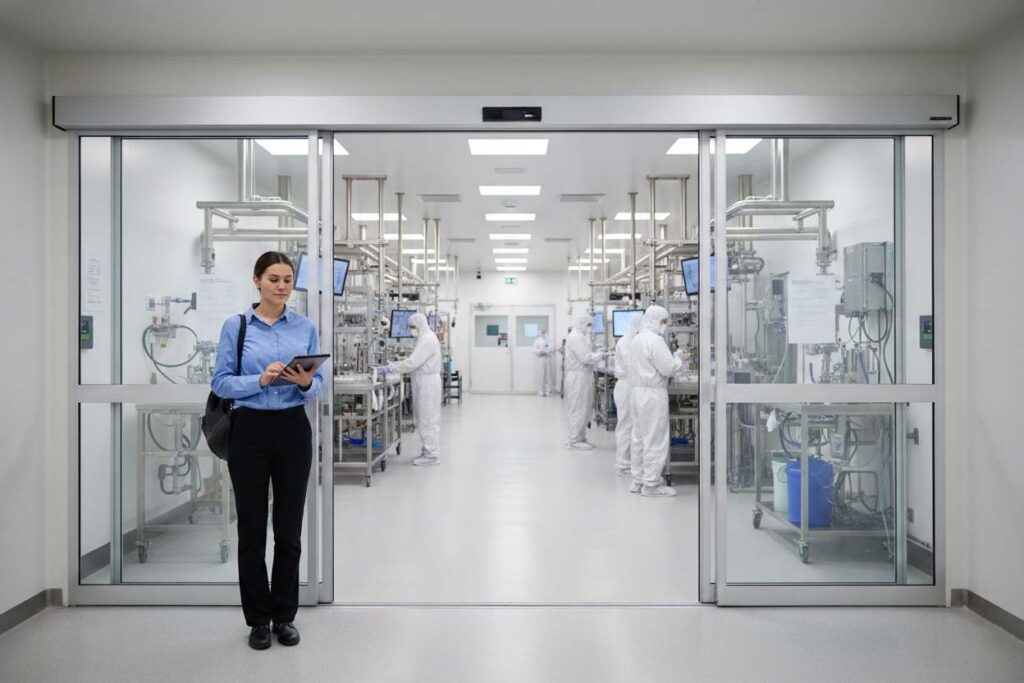
The biotechnology sector you are about to enter is more advanced, more regulated, and more opportunity-rich than ever before. But it is also more demanding. Organizations seek professionals who understand both science and structure — individuals who can innovate responsibly within regulated ecosystems.
This is why proactive students are beginning to explore learning pathways that combine biotechnology fundamentals with GMP, QMS, pharmaceutical operations, and industry exposure. Not as an academic requirement. But as a strategic career decision. Because readiness is no longer built after getting hired. It is built before.
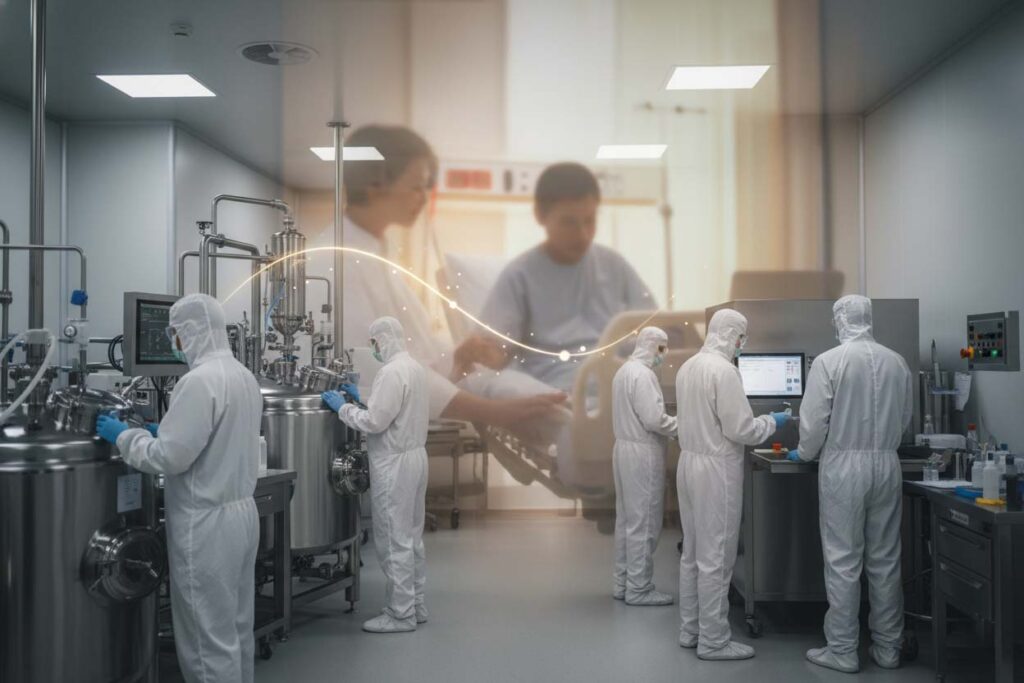
One day, perhaps sooner than you expect, a therapy manufactured under carefully controlled conditions will reach a patient who has been waiting for hope. Behind that therapy will stand scientists, quality professionals, manufacturing teams and the invisible architecture of GMP ensuring everything worked exactly as it should.
The question worth asking is simple:
When you step into the biotechnology industry, will you still be learning what GMP means or will you already be thinking like a professional who understands why it matters?